
You can’t get on any form of social media these days without seeing a parent complaining that “the school ain’t gone take my kid’s phone,” followed by a million reasons why that’s not going to happen.
And honestly? As a teacher, I agree with part of that.
I want absolutely nothing to do with your kid’s phone.
I don’t want to take responsibility for an $1,000 device. I don’t want to argue with a teenager about handing it over. I don’t want to police it all day.
I want to teach.
The problem is that far too much of my teaching time is spent dealing with phones and smartwatches instead.
Texting, playing games, checking notifications, and scrolling social media all take precedence over schoolwork. And I know…
If you just made your class more interesting, maybe they’d pay attention.
I teach Journalism.
It’s fun. It’s hands-on. It’s an elective. My students take pictures, make videos, produce the school news, create a yearbook, and work on actual publications.
I also set clear expectations.
And those phones are still a fight.
Before you start in on “my kid would never,” please know that every time I have ever said my kid would never, he nevered like he had never nevered before.
And that’s my “good” kid, not my “bad” one.
But here’s one thing I haven’t had to fight with my kids about: their phones.
Maybe that’s because my more challenging child was the first one to get one. Before I handed him a tiny computer with access to the entire freaking world, I researched parental controls nonstop and locked that thing down.
We’re an Android family, so one of the first tools I used was Google Family Link.
It allowed me to put limits around screen time and apps, require approval for downloads, and control when his device could be used. It handled most of what I needed, and it was free.
But because this was also the child who had taught me to anticipate possibilities I had never previously considered, I wanted more oversight of his communication. We added MMGuardian as well.
That one wasn’t free.
I didn’t care.
Knowing that I had another tool to help me watch for problems like inappropriate messages, bullying, or other situations he wasn’t ready to navigate completely independently was worth paying for.
And before anyone comes for me: my oldest was not actually a “bad” kid. That’s what we jokingly called my more challenging child. He pushed limits. He found loopholes. If I created a boundary, there was a pretty good chance he was going to inspect that boundary for structural weaknesses.
Which, incidentally, made me very good at parental controls.
By the time my second child got a phone, I was practically a professional. He had also witnessed enough with his older brother that he didn’t question me much about what was and wasn’t allowed.
Were there times I “needed” to get in touch with my kids during the school day?
Sure were.
I wasn’t working at their school then, either.
So I called the front office. I emailed a teacher. I used the systems that existed for exactly that purpose.
Because I knew that if my kid was doing what he was supposed to be doing, he wouldn’t be checking his phone during the school day anyway.
Maybe it’s just me. Maybe it’s just the values we’ve chosen for our family.
But my child’s education comes before the electronic device in his pocket.
And since we’re already here, let’s talk about the big one:
“But what if there’s an emergency?”
I understand this argument.
Really.
If something terrible happens at my child’s school, I want to know he’s okay. I want to hear his voice. I want information immediately.
I’m a mom, too.
But there’s a difference between my child having a phone available for an emergency and my child having unrestricted access to that phone throughout every school day because an emergency might happen.
Those are not the same thing.
And during an actual school emergency, hundreds of students simultaneously calling, texting, recording, posting rumors, or communicating incomplete information can create problems of its own.
If a school goes into lockdown, I want the people inside following the school’s emergency procedures. I want law enforcement and emergency personnel able to do their jobs. And as desperately as every instinct in my body might scream at me to go get my child, I also know I’m not the person trained to handle that emergency.
Neither are you.
Okay, Rambo. Sit down somewhere.
Here’s the point I’m trying to make:
Schools shouldn’t have to parent our children’s phones for us.
If your child needs a phone, give them a phone.
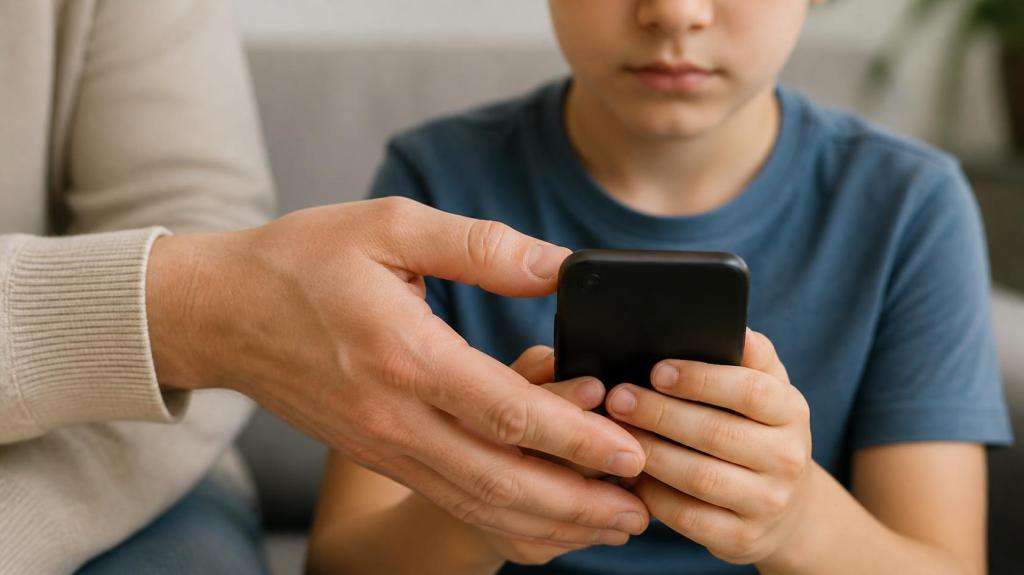
Then parent the phone.
Set limits. Use parental controls. Decide which apps they can access. Decide when they can access them. Know what they’re doing online. Adjust those boundaries as they get older and demonstrate that they’re ready for more independence.
Handing a child a smartphone doesn’t have to mean handing them unrestricted access to it.
And if enough of us had done that from the beginning?
Maybe schools wouldn’t have felt like they had to solve the problem for us.
Those are my thoughts.
As always, if you disagree, we can discuss it like adults.
If you can’t discuss it like an adult…
Attendance isn’t mandatory here.

Leave a comment